Playing around with some formatting and media. This test page is temporary.







This piece originally appeared in the July 25, 2013 edition of the Tooele Transcript Bulletin.
It seems like a strange place for a fort—at least in modern context. Today, the large crop field off Erda’s Liddell Lane is populated only by alfalfa, a sprinkling system, and an odd but unassuming clump of weeds. And yet there’s no mistaking the monument, a tall black sign planted across the road at the edge of an immense cornfield. It identifies the wheat field as the former location of Bates Fort—the original site of Erda’s settlement.
“The terrain down there is completely different now,” explained Joe Liddell, a third-generation descendent of the settlement’s namesake, pioneer Ormus Ephraim Bates. “In pioneer days there were a couple dozen springs in a square mile belt.”
It was Liddell who placed the sign marking Bates Fort in June of last year. Last Friday morning, he pointed toward the odd clump of weeds and explained that when the Bates family settled here 161 years ago, the spot was at the center of a lush convergence of artesian springs—dubbed “Tule Springs”—that dominated the landscape. Suddenly, the reasons for the Bates settling in this place become clearer.
When most Tooele Valley locals think of their pioneer forebears, places like the Tooele Pioneer Museum and the Benson Grist Mill immediately come to mind. But the Bates Fort sign, which was placed and dedicated just last year, is one of numerous lesser-known memorials to the pioneer era that pepper the valley floor. This article highlights several of these lesser-known sites in the valley with a focus on sites that are either publically accessible or viewable from surface streets.
Settlement of Tooele County began in 1849 at E.T. City (modern Lake Point area) and Tooele (then spelled “Tuilla”). These early communities were followed in 1852 by Bates Fort (later Batesville, then Erda) and Grantsville.
Along with the natural landscapes of these areas, relations between settlers and native Goshute Indians are key to understanding the development of these early communities. While Mormon relations with native populations were generally positive, occasional skirmishes with local Goshutes in the early 1850’s prompted settlers to “fort up.” This was done, according to Liddell, by consolidating houses close to each other to form a structural barricade. As settlements expanded, tall mud walls were constructed around their perimeters.
Bates Fort is the first stop on our tour of lesser-known monuments. Built in 1852, the wall at Bates Fort was Tooele Valley’s first. The 12 foot barrier was fashioned by pouring clay into wooden forms. The result was a sharply sloped pyramid with a two 2 foot base and a 1 foot tip. The north wall was never built because it would have blocked a wide spring runoff.
“It was all done by hand and it took them some months to build,” Liddell said, “And it was all unnecessary.”
In fact, the walls around Tooele Valley settlements were quickly deemed unneeded, due in large part to the settlers heeding President Brigham Young’s counsel to feed the Indians rather than fight them. Indian attacks declined sharply by 1854, and no more walls were built. The clay from Bates Fort’s wall was later used to bank two of the springs. Traces of it are still visible at the spring sites, which are located on private property.

No physical evidence of Tooele’s mud wall remains, but a replica segment of the barrier at the corner of 1st West and Vine gives visitors an idea of how these walls looked. The replica and an adjacent stone monument were erected by the Settlement Canyon Chapter of the Sons of the Utah Pioneers (SUP) in 2009. This is the second stop on our tour.
Built in 1854, Tooele’s mud wall enclosed the four block settlement between 1st West, 1st East, 1st South and 1st North. The northwest section of the wall was never completed.
In a letter to the Deseret News published on December 11, 1854, Tooele resident Alexander Gee proudly describes the half-finished wall as “substantial and handsome as any I have seen in all the settlements I have ever visited.”
Natural landmarks also played a significant role in Tooele Valley history. Adobe Rock in Lake Point is perhaps the most recognizable of these, but what’s less well known is the Daughters of the Utah Pioneers marker fastened to its west face. This is our third stop.
The rock itself stands behind a fence on Rio Tinto property, but unpaved pullouts north and south of it along SR-36 afford excellent views. The DUP plaque reads thus:

“On July 27, 1847, three horsemen from the scouting party sent out by Brigham Young, obtained an excellent view of the surrounding valley from the top of this rock. In 1849, Captain Howard Stansbury of the United States Topographical Engineers, built a small adobe house by this rock for his herders, hence the name “Adobe Rock.” The nearby highway follows the same route as the old pioneer trail used by explorers, trappers, emigrants and gold seekers. A spring nearby made this a favorite camp site.”
According to History of Tooele County, published by the DUP in 2012, settlers would meet visiting dignitaries at the limestone pillar and signal their arrival to their respective communities with flags or fire.
We now south toward the economic hub of Richville, located in modern Stansbury Park. This area is best known for the meticulously preserved Benson Grist Mill complex and pioneer-era homes. But the historic significance of the large, spring-fed pond immediately south of the mill is often overlooked. Prior to construction of the grist mill in 1854, the springs that fed the Millpond (then called Twin Springs Creek) formed a loose body of water that flowed freely toward the Great Salt Lake.
Twin Springs’ importance to immigrants pre-dates the settlement of Richville. Early immigrants camped at the springs. Period maps aerial photography from the 1950’s suggest that the famous Hastings Cutoff trail ran right along what is now Stansbury Parkway. A railpost marker at the southeast end of the pond marks the spot where one of the parties camped in 1850.
The creek was dammed to power the grist mill and nearby operations, forming a roughly 30 acre pond. The Millpond became a place for gathering, fishing, and performing LDS baptisms. It remains a recreational hot spot to present day.
The last stop on our tour memorializes one of Tooele County’s most unique and fascinating figures. Hilda Anderson was born in Sweden in 1859. She was just 7 years old when she crossed the plains with her mother and two brothers. She spent her early adulthood in the Deep Creek/Ibapah area caring for the sick with her husband, John Erickson. They later moved to Grantsville, where they built a small bungalow that still stands at 247 West Main Street.

Hilda Erickson was known for her industrious character and her diverse resume. She was a tailor, a licensed midwife, and merchant. She also dabbled in general medicine and dentistry. But what Hilda was best known for was her longevity. In 1964, at the age of 104, she was recognized as Utah’s last pioneer, having outlived all of the approximately 80,000 Mormon pioneers who trekked to Utah prior to the completion of the First Transcontinental Railroad. She died in 1968 at the age of 108.
Hilda was said to have boasted about traveling by ox team, mule team, buggy, wagon, bicycle, car, and airplane.
Joe Liddell, 90, knew Hilda well, having written annual feature stories about her in the Deseret News for nearly 20 years.
“When she was 105 years old, asked her what she missed the most,” Liddell recalled. “She said in her Swedish accent, ‘Well, I miss having a man around the house.’ The headline read ‘105 and wants a man.’”
Asked to describe Utah’s last pioneer, Liddell said Hilda was “very agreeable, but quite firm in her opinions. She was quite a woman.”
Hilda Erickson’s life is memorialized by a life-sized bronze statue commissioned by the Sons of the Utah Pioneers. The statue stands in front of Grantsville’s City Hall, and depicts Hilda riding side-saddle on a horse. Her story, like the fitted stone foundations and other adeptly fashioned structures in Tooele Valley, personifies an era of resourcefulness, independence, and grit—one worthy not just of celebration, but of deep exploration as well.

Tooele resident and off-road pro racer, Sarah Burgess, says her sport is chaotic, but provides an ‘amazing lifestyle’ for her and her family in Tooele. She says living in Tooele is like ‘being on permanent vacation.’ (Photo courtesy Sarah Burgess/BMI Racing)
This article originally appeared in the September 14, 2018 edition of the Tooele Transcript Bulletin
By Clint Thomsen
The 525-horsepower custom truck is her pride and joy. She knows it bumper-to-bumper, maintains it meticulously and services it thoroughly after every run. In fact, she routinely takes it all apart and puts it back together — because when it comes to the world of professional off-road racing, attention to detail counts.
“It’s amazingly chaotic,” Sarah Burgess said of her sport as she navigated the bay of her workshop at Utah Motorsports Campus in Grantsville last week. Sparks flew from her truck as her husband, Adam, used an angle grinder to prep the chassis for a weld. “But it’s an amazing lifestyle here in Tooele. It’s like being on permanent vacation,” she said.
Burgess’s company, BMI Racing, operates full-time out of UMC, and is entirely a family affair. Sarah is the owner and driver, while Adam serves as crew chief and engineer. Their 16-year-old daughter, Bridget, joined the team driving her own truck last year.
“It’s a lot of family time together,” Burgess said.
Burgess was the only Utahn to compete in the Lucas Oil Off Road Racing Series at UMC last month, placing fifth in the event. She races in the Pro Lite class, which features mid-size V-8 trucks that resemble pickup trucks, only leaner and meaner, and with more extreme angles. The Burgesses are currently preparing for their next event in San Bernardino, CA. The series runs through October.
Burgess was born and raised in Brisbane, Australia, where she got into extreme sports at a young age, starting with BMX bike racing.
“I always liked to get my hands dirty,” she said. “I always followed my brother through what he was doing. We did speed skating on roller blades, then speed skating on ice.”

Sarah Burgess’s Pro Lite truck (Photo courtesy Sarah Burgess/BMI Racing)
She says the fact that racing is a male-dominated sport doesn’t faze her. Nor does she get any grief from the guys she races against.
“At the end of the day, it doesn’t matter if you’re a guy or a girl,” Burgess said. “When you get in that truck and put your helmet on, it’s all about horsepower. It’s about bravery and making good decisions.”
Burgess fell in love with the automotive industry in 2000, when she accompanied Adam on a business trip to the U.S. and attended a National Hot Rod Association drag race.
“That was my first motorsports event,” she recalled. “I saw a car pass at 320 miles per hour and I was blown away by the sound, the feeling, the visual of this dragster zipping down the track.”
The Burgesses moved from Australia to the Los Angeles area in 2008. Burgess estimates that the family has driven more than 300,000 miles across the country over the last decade. When racing events brought them to Tooele Valley, the Burgesses knew they were finally home. They relocated to Tooele City in June.
“We eat, sleep and breathe this stuff and wanted to be closer to the track,” Burgess said, noting that it was the small-town atmosphere and sense of community that drew them specifically to Tooele Valley. “Every time we came up here, there was this feeling.”
Burgess says she was especially touched by local Independence Day celebrations.
“We were driving on up Main Street on the 3rd of July and everyone already had their chairs set up for the parade, and that’s amazing,” she said.
When they’re not on the road, the Burgesses spend most days in their workshop near the off-road track at UMC. Bridget is home-schooled, which allows her the flexibility to work ahead in order to spend time at the track. Burgess noted with a smile that while Bridget has been racing in her own truck for two years, she only recently got her driver’s license.
“What we do is super stressful, especially on the business side of things,” she said. “It’s the lifestyle, peace and quiet of Tooele that we love.”
As owner of BMI Racing, Burgess wears many hats. She personally manages marketing and writes all proposals. Fabrication, engineering and technology are also handled in-house. But although she’s learned to enjoy the business aspects of her operation, it’s the dirt track behind the workshop that speaks to her soul.
“We hit the front straightaway full-throttle,” she explained, her enthusiasm obvious in her inflection as she described the track from the top row of the spectator bleachers. “And we have a ‘rhythm section’ after Turn 4, which is a ton of fun. The trucks bounce through it really good. If you get it wrong, you just hold on for dear life.”
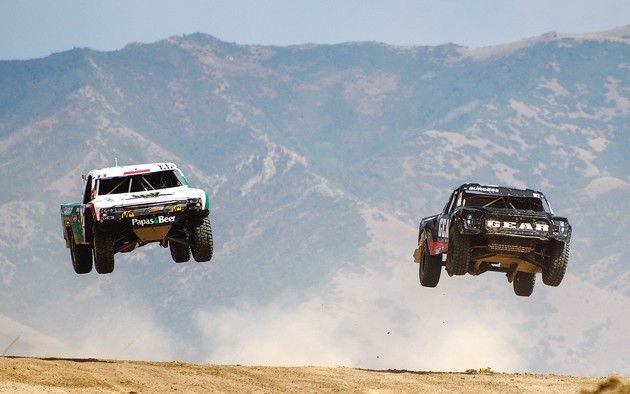
Sarah Burgess (right) qualifies in her Pro Lite truck at the Lucas Oil Off-road Racing Series at Utah Motorsports Campus. (Photo by Sue Butterfield, source: Tooele Transcript Bulletin)
Burgess says that while the skills of driving a track can be learned over time, qualities like bravery, discipline and decisiveness are critical to off-road racing.
“Because it’s dirt, the surface of the track changes every lap,” she said. “You’ll come into a corner and you’ll see this divot, and your natural instinct is to let off the gas. But you actually need to put your foot down and power through it. Otherwise you’ll catch the rut and it’ll flip you.”
Burgess speaks from experience; she’s rolled her truck 12 times. On one occasion, it rolled four times before coming to a stop.
“The fear is something you have to overcome,” she said, noting that close calls often facilitate wisdom. “When we fly off a jump, we hope that everything’s fine on the other side, because there’s nothing you can do flying through the air.”
And while she delights in the uncertainty of it all, she speaks about maneuvering the track as if it were a science — a mere matter of analysis and iteration.
“If I were to hit the brakes mid-air, I would nosedive and crash,” Burgess explained. “But if I’m flying and I’m rotated too far up, I can touch the brakes to bring the nose down for a better landing.”
Burgess believes the lessons she has learned on the track are applicable to everyday driving, and she takes every opportunity to pass them along. Last year, she partnered with a sponsor to provide a series of women’s car-care clinics that educated women about the various issues that can arise with their vehicles.
“We talked about what certain dashboard lights mean, when to panic and when not to panic,” she laughed.
Burgess plans to hold similar events specifically for millennials and younger drivers. She says she’d love for UMC to hold winter clinics for driving safely in bad weather.
In the meantime, she’ll race and work on her truck, tearing it down and scrubbing the chassis with oil. While she hasn’t yet given it a name, she has considered a few, including “Christine” and “Wile E. Coyote,” the latter because “no matter what we do to this truck, it keeps on going.”
The Burgesses received their Green Cards last year and are working toward U.S. citizenship, something Burgess considers an incredible privilege.
“I’ve been to NASCAR and I’ve stood there for the National Anthem and watch the planes fly overhead, and I’ll tear up,” she said. “I’m so lucky to be here.”
Burgess says people often assume that since she’s a professional racer, she must have come from money.
“We moved here with six suitcases,” she said. “My dad was a bricklayer and my mom still works in a grocery store. Everything we have is the result of sheer determination. If your heart is really in it, then it’s something you will accomplish.”
Follow Sarah Burgess on social media:
http://www.facebook.com/sarahburgess97
http://www.instagram.com/sarahburgess97

Planes line up at Tooele’s first airstrip, which later became known as the Tooele City Municipal Airport. (Slide collection – Ed Dalton via tooeleonline.com)
The following piece originally appeared in the February 16, 2016 edition of the Tooele Transcript Bulletin.
Sometimes, the greatest treasures are those that lie closest to home, often hidden in plain sight.
Take, for example, the antique metal slide projector in Ed Dalton’s basement, which he stored there after his father passed away over a decade ago. It was only recently, while planning for a family reunion, that Dalton’s thoughts turned again to Dad’s old projector. That’s when the retired educator unlatched the heavy black box and noticed — for the first time — the small compartment built into the end of the case.
“It was full of slides,” recalled Dalton as he ran his finger along the stack of 35mm photographic slides that had sat undisturbed in their accidental time capsule for nearly 70 years.
He left the projector alone for fear of damaging it, but eventually a light table would illuminate the tiny transparencies and trigger an avalanche of nostalgia. There was a row of single-engine planes against an Oquirrh Mountain backdrop, a group of men posing beside a plane with the words “Toolee Bell” painted proudly on its nose. Another slide depicted Dalton’s sister, Brenda, at age 5 or 6, perched on the wing of their father’s plane.
Some of the slides were scenes from family trips. A few revealed Tooele City from the air. Most, however, captured the golden age of aviation in Tooele Valley — the lively postwar days when pilots flocked to the narrow airstrip southwest of downtown Tooele, hungry for air.
“It was a little treasure trove,” said Dalton.
Specifically, Dalton’s slides focus on the Tooele Flying Service and the non-commercial Tooele Flying Club, which were organized shortly after World War II by a group of pilots, businessmen and community leaders in Tooele. The most detailed account of their history comes from the journal of Tooele businessman LaVar Tate. According to Tate’s journal, the idea for a local aviation hub sprung from a dilemma: he loved to fly, but the closest airstrip was in Salt Lake City.
Tate purchased 80 acres of land in southwest Tooele City in the early 1940s to create Tooele Valley’s first airstrip. According to Tate, the dirt runway was graded with equipment from the Tooele Ordnance Depot by prisoners of war who were employed there. A hangar large enough to house two small planes was built with financing help from local physician Herb Milburn and Buck Inglesby.
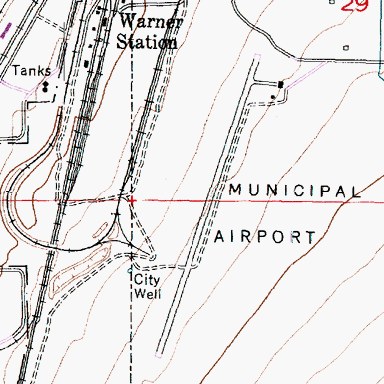
Topo map of Tooele Municipal Airport (topoquest.com)
After the conclusion of World War II, Tate and Milburn organized the Tooele Flying Service and purchased their first plane, an Aeronca Chief, which they christened the “Toolee Bell.” By the mid-1940s, the fledgling airport boasted a flight school, several trainer aircraft, flight instructors and a mechanic.
Private and aspiring pilots flocked to the airstrip, their numbers bolstered by returning war veterans. Among those veterans was Dalton’s father, Edward Dalton III, who had served in the U.S. Army.
Another member of the Tooele Flying Club, Frank Eastman, was the company pilot for McFarland and Hullinger, a Tooele-based mining contractor that leased hangar space at the airstrip for its planes until 1987. Eastman often flew company founders Fayette McFarland and Sidney R. Hullinger to meetings in the region and return in storied fashion.
“He’d fly in and buzz the town so everybody knew they were coming in,” said Sid Hullinger, the latter founder’s son. “He’d get above the houses and rev the engines so we knew to go down and pick them up. If it was night, we’d drive two or three cars down there and light (the airstrip) with our headlights.”
It is unknown exactly when the Flying Club itself was formed or what specific events it might have held (Tate makes no mention in his journal entry), but Dalton said it provided a unique pastime for many local pilots.
The airstrip was deeded to Tooele City around 1948 so the Army Air Corps could pave the runway, but even then, takeoffs and landings could still get rocky. Former Tooele City Councilman Dave Faddis recalls driving the length of the runway to remove rocks and debris.
“Technically, it was not an airport,” said Faddis. “To be an airport, you have to have services and communications, and we never had those.”
Regardless, the airstrip eventually became known as the Tooele City Municipal Airport. It saw continued use until concerns about westward residential growth halted plans to develop it further. It closed in 1989 when Bolinder Field (now Tooele Valley Airport) opened in Erda. According to Faddis, the airstrip’s five hangars still stood at least into the late 1990s. Today the area is known colloquially as Tooele’s Education Corridor and is home to the Tooele Applied Technology College, the Tooele Community Learning Center and the new Utah State University Science Building.
There’s not much left of Tate’s aviation hub today, but as with Dalton’s slides, glimpses of the past can still be had. Most of the old airstrip still exists behind walls of brush and long grass, extending southward from the new USU building toward the Stockton Bar.
Dalton doesn’t know how or when the Tooele Flying Services and club officially disbanded. He said his father’s involvement largely ended when a stiff wind flipped his plane upside down on the flight apron. But that didn’t stop the elder Dalton from flying when he had the opportunity, and it didn’t curb the younger Dalton’s affection for the old airstrip.
Dalton, who serves as Executive Director of the Tooele County Education Foundation, reflected on the old days as he gazed down the airstrip during the grand opening ceremony of the USU Science Building last month:
“The view brought to mind a number of those stories told by my dad of those early flying days. I could visualize small planes coming and going, flying around town, buzzing the business district and returning to land and take off again. It must have been a busy airport 65-70 years ago.”
-Clint Thomsen
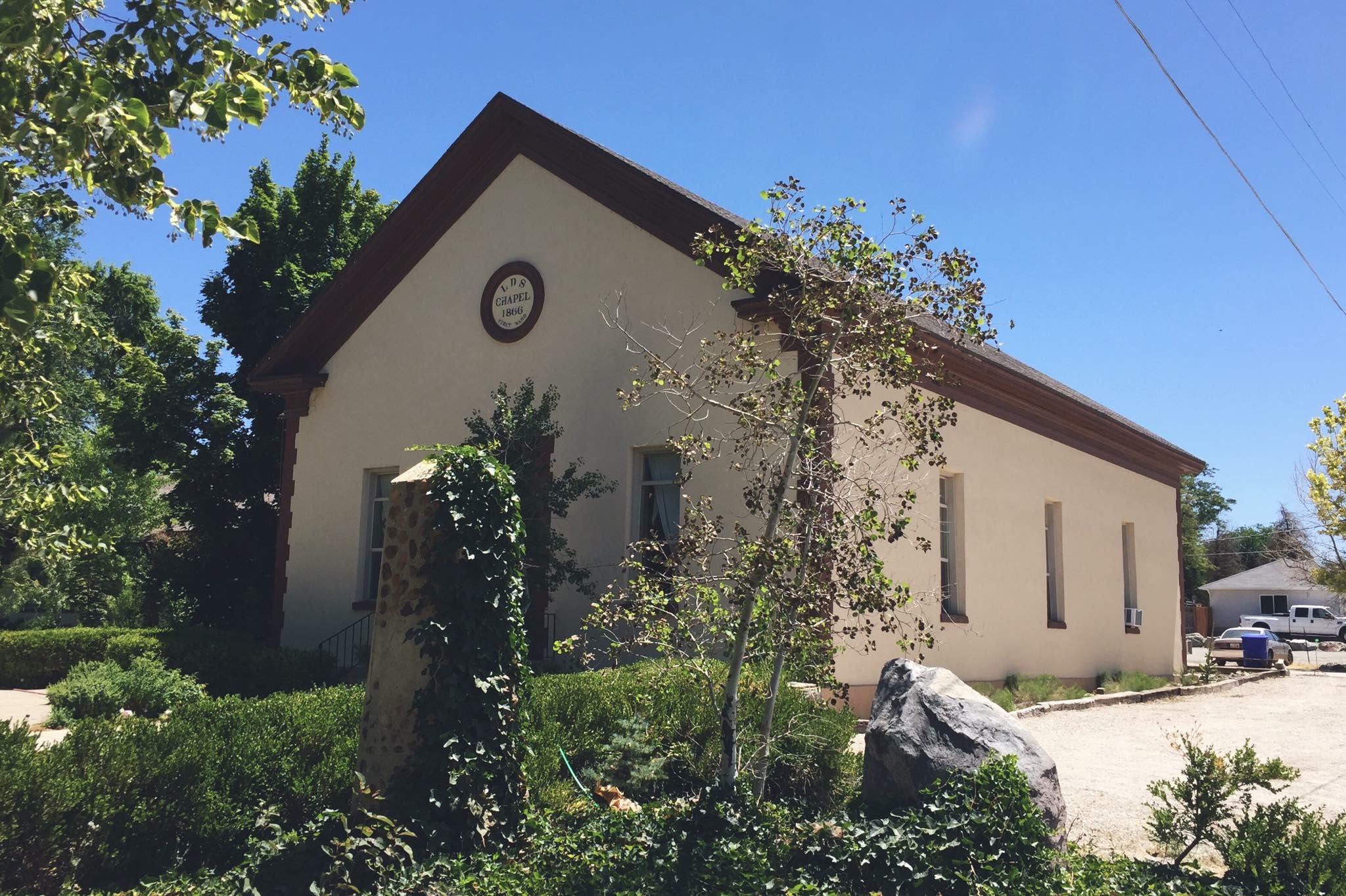
This piece originally appeared in the September 22, 2016 edition of the Tooele Transcript Bulletin.
“Are you going through?” Emily Johnson asked her friend, Rachael Anderson, as they perched atop a ladder in the historic Grantsville First Ward Meetinghouse last Saturday afternoon. Anderson aimed her flashlight through a small opening in the adobe wall, illuminating the vacuous attic beyond. The decision was a no-brainer, and with an animated “yep!” she disappeared through the dusty portal.
More than two decades have passed since the childhood friends first explored this attic and peered through tiny ductwork holes into the chapel below. The beam from Anderson’s light danced across the exposed rafters, scanning for the spot where they had signed their names in dust.
“It’s all still here, Em!” she called back, her voice trailing off as she tiptoed over ancient joists. “Just like I remember it.”
The friends had come to the old chapel at the corner of Clark and Cooley streets for a special open house celebrating the 150th anniversary of its dedication. The building’s current owners, Kelly and Macae Wanberg, said they couldn’t let the milestone pass without paying tribute to its legacy. Former Grantsville mayor Byron Anderson also attended the event, along with several other families with ties to the chapel.
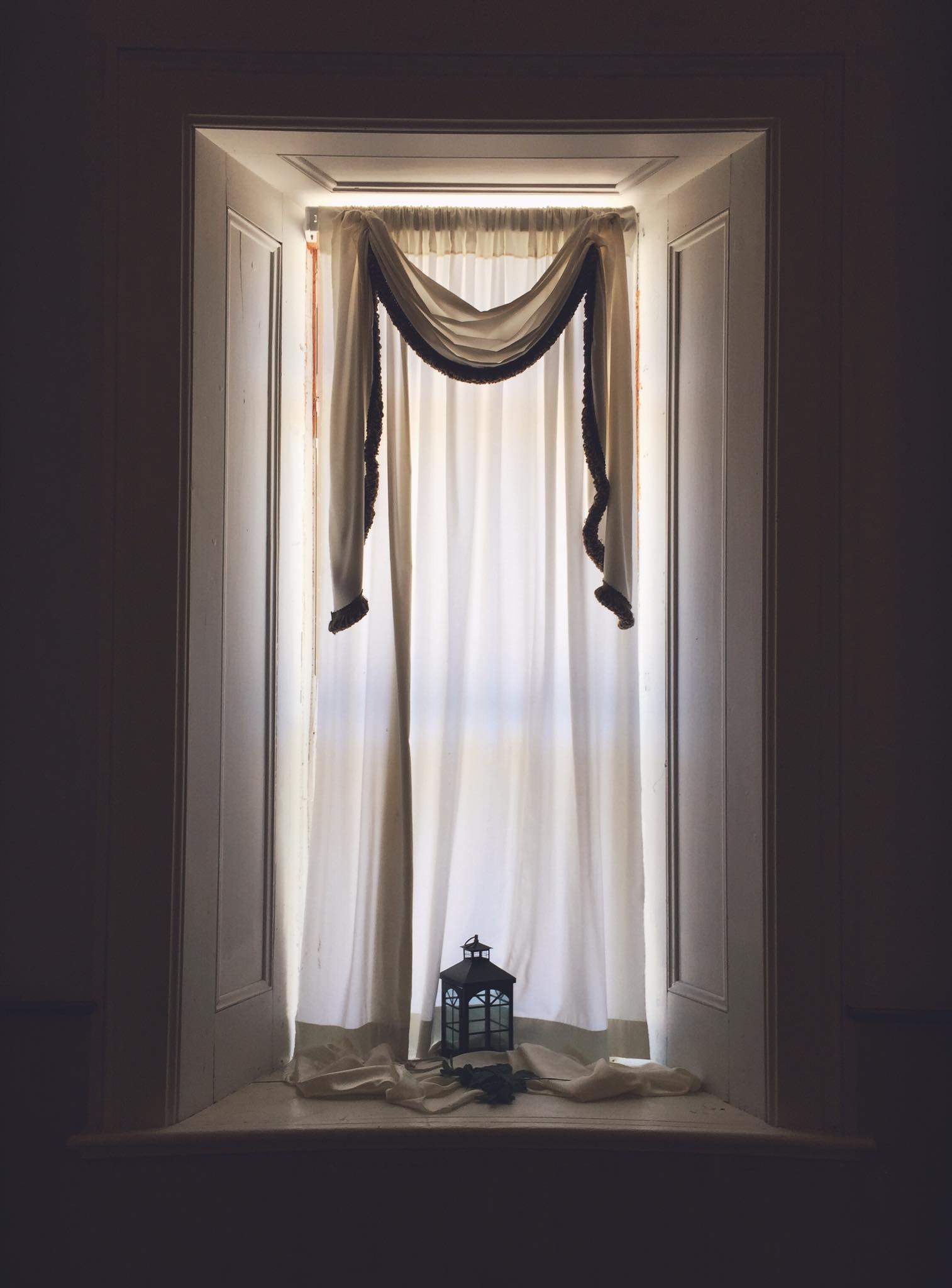 “Being here brings back good memories,” said Lanae Williams, who attended LDS services here beginning in the 1940s. She remembers delivering a talk or two from the pulpit. “The talks were something we all tried to avoid,” she laughed as she ran her fingers across the backrest of an old pew. “But I loved it here.”
Construction of the chapel probably began in the late 1850s, according to Craig Anderson of the Sons of the Utah Pioneers, Twenty Wells Chapter. Prior to its construction, church services were held in a primitive log hall southwest of the site on what is now Cooley Street. The building directly west of the chapel (now the Donner Reed Museum) was the original schoolhouse. These buildings were situated at the heart of the early settlement, which was surrounded by a wall made of adobe brick and mud for protection from Indian raids. The new meetinghouse would also be built within the walls of the fort.
The new church was built under the direction of Hugh Gillespie, an early Mormon pioneer who cut stone for the Salt Lake LDS Temple. Gillespie designed the Greek revival structure in the traditional style of early LDS buildings, with a gable roof and a vestry on the rear side. The chapel’s walls were over 2 feet thick and built with adobe bricks fashioned from mud and hay, then plastered over with stucco.
Inside, a pair of kerosene lamps hung from ornate rosettes in the ceiling. The lamps could be raised and lowered through the rosettes via framed pulley systems in the attic. Similar rosettes can be found in the Salt Lake Temple.
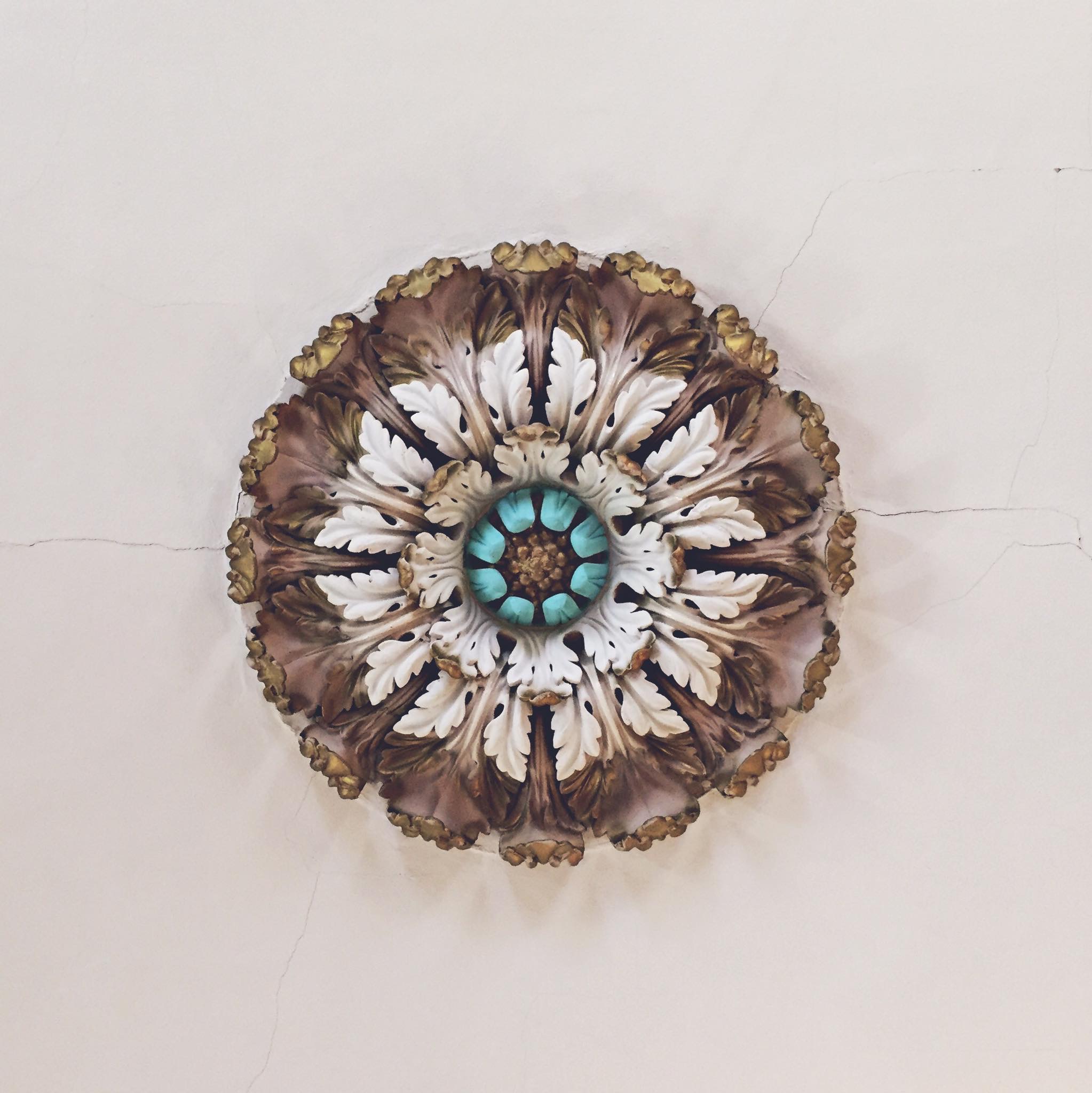 “It’s hard to believe this was all done without power tools,” said Kelly Wanberg. “Just old-fashioned tools with wrought iron nails to hold it all together. It’s really amazing.”
The meetinghouse was dedicated on July 14, 1866, with many LDS dignitaries in attendance. The beloved structure remained central to religious and social life in Grantsville as the community grew. The first major upgrade to the building came in 1952 with the addition of a wing of classrooms on its east side. The Grantsville Ward (now the Grantsville First Ward) called the chapel home until 1978 when it relocated to a modern facility.
The meetinghouse was then sold to Tate Mortuary for use in viewings and funeral services. It was listed on the National Register of Historic Places in 1982. The building holds the distinction of being one of the oldest continuously-used buildings in the region and one of the only LDS meetinghouses of the era still standing.
“Every Church president from Brigham Young to David O. McKay has given an address from this pulpit,” Anderson said.
 The church was then used as a residence — first for the Pectol, then Hamatake families. Anderson, the seventh of nine Pectol children, spoke nostalgically of her childhood spent in the old church.
“We all had classrooms for bedrooms,” she said. “We each had our own chalkboard!”
As a close neighbor and Anderson’s best friend, Emily Baird Johnson also spent considerable time at the building.
“The place was magical,” she said. “There is a sweet, peaceful feeling that has always been here through the years.”
By the time the Wanbergs purchased the chapel in 2011 with hopes of starting a theater and drama school, the building’s west wall had become dangerously unstable and threatened the entire structure.
“The wall was buckling,” Macae Wanberg said. “There had been a lot of damage from rain, and adobe doesn’t really do well when you mix it with water.”
The Wanbergs hired a contractor to shore up the wall with reinforced cinder block, then added interior pillars to prevent the ceiling from collapsing in the event of an earthquake. The renovated assembly hall, known now as the Old Grantsville Church, features a stage and an open floor. It bustles with drama students, theater audiences and wedding parties.
“When I was a child, I was a bit quiet around most people,” Macae Wanberg reflected. “I found that the stage was the one place I could really feel confident.”
She says her favorite part of theater is watching children who lack confidence or have disabilities stand in front of an audience and receive applause. The children’s theater side of the business recently finished its run of “Jack and the Giant,” and the dinner theater will present Rodgers and Hammerstein’s “The King and I” in October.
Saturday’s open house featured a historical presentation by Craig Anderson and performances of selected numbers by cast members of past and upcoming productions. Guests enjoyed cake while reminiscing about their experiences in the chapel.
For Anderson and Johnson, now in their early thirties, the memories came flooding back. They remembered pretending to be animals on the old rostrum ledges and jumping from the pulpit onto a trampoline that the family set up in the room. They remembered spooking their friends by stepping on a particularly creaky part of the floor.
Then they remembered their trek up to the attic and the signatures they left in the pioneer dust. And with that, they headed for the stairs.
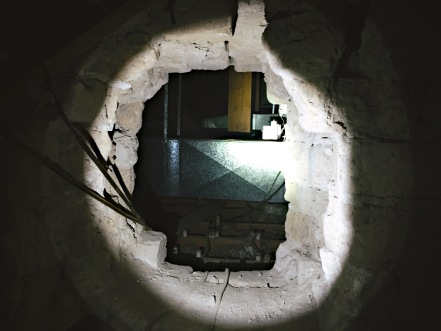
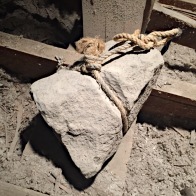
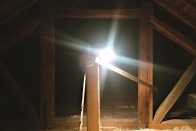
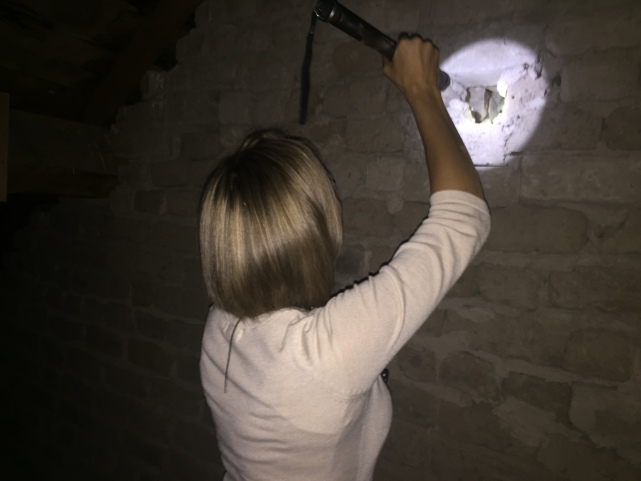
The search for their signatures was ultimately unsuccessful, but it afforded the friends a veritable trip back in time. They marveled by flashlight at the strands of hay and finger impressions still visible in the exposed adobe bricks. There was the hand-hewn truss system that still so ably supports the roof. There was the pulley rigging for the kerosene lamps, and the boulder that acted as a makeshift counterweight for them. It was as if the clock had stopped in 1866.
“This has made my day. My month. Possibly my whole year!” exclaimed Anderson.
The Wanbergs later joined the ladies in the attic. Although she had once looked inside, this was Macae Wanberg’s first time climbing through.
“We’re not originally from Grantsville,” Macae Wanberg said. “But we feel a part of it now. I guess we’re also a part of the history — and future — of this building. That’s been a great thing.”
Copyright 2016 Clint Thomsen and BonnevilleMariner.com
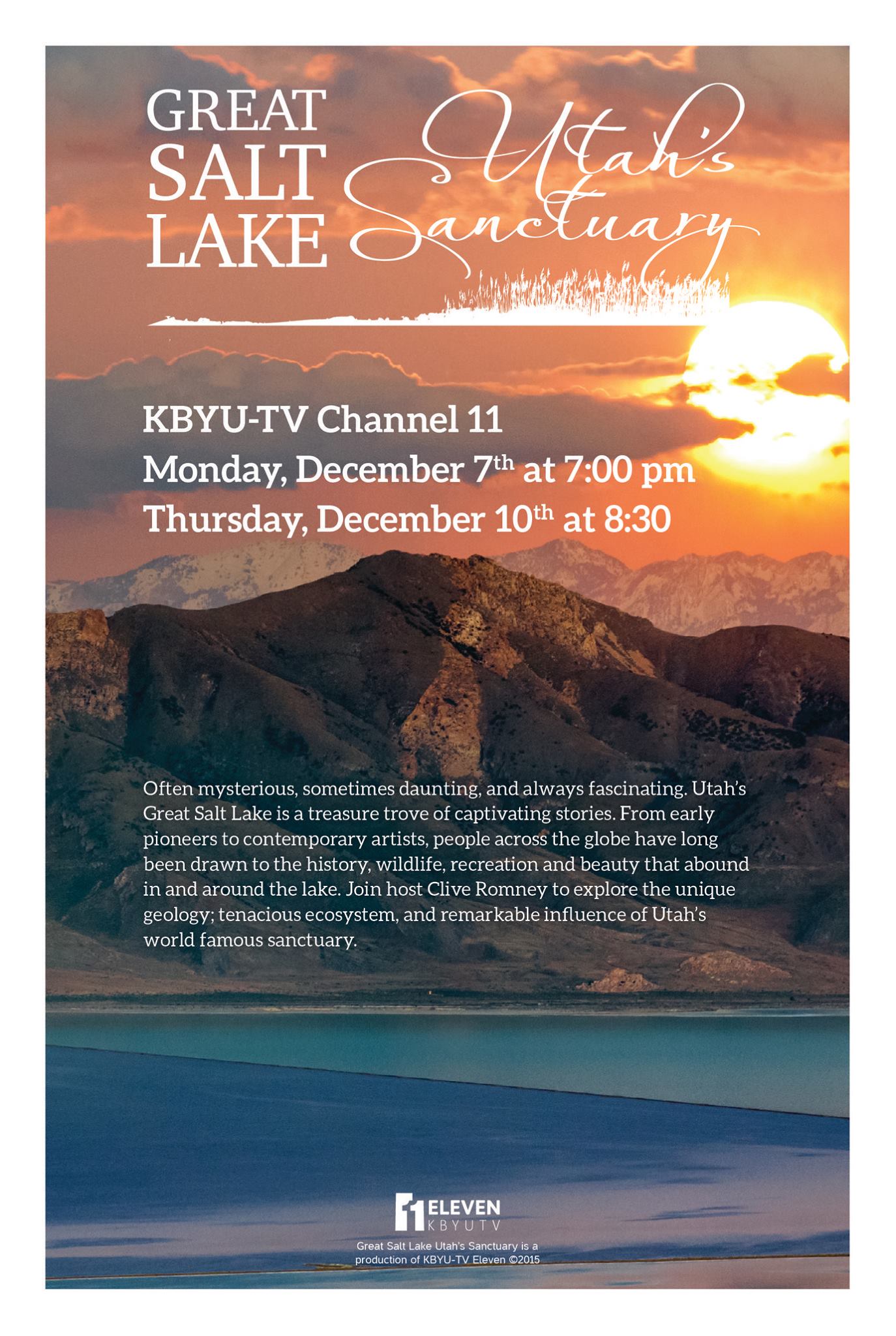 Last summer I was contacted by BYU Broadcasting to provide commentary for a new documentary about Great Salt Lake and Saltair. I had a wonderful time working with Director Rob Sibley and his crew, and I think the documentary turned out great.
The 54 minute piece, titled Great Salt Lake: Utah’s Sanctuary, covers the history, wildlife, art and recreation of Utah’s inland sea. The recreation section is where I come in. I discuss some of the lesser known, early resorts along the lake’s shores in addition to Saltair. In addition to the commentary, the documentary features some rare film from the old days and some stunning aerial footage– all set to a masterful ambient soundtrack by composer Marden Pond.
The broadcast premiere was 12/6, with a repeat tonight (12/10) at 8:30 on KBYU 11. For non-locals, I’m told it will be available on-demand later this month. Check it out, and let me know what you think!
For vintage and modern photos of the Great Salt Lake and Saltair, like my Facebook Page “Try to Sink.” Then come back and enjoy some of my previous pieces on Saltair:
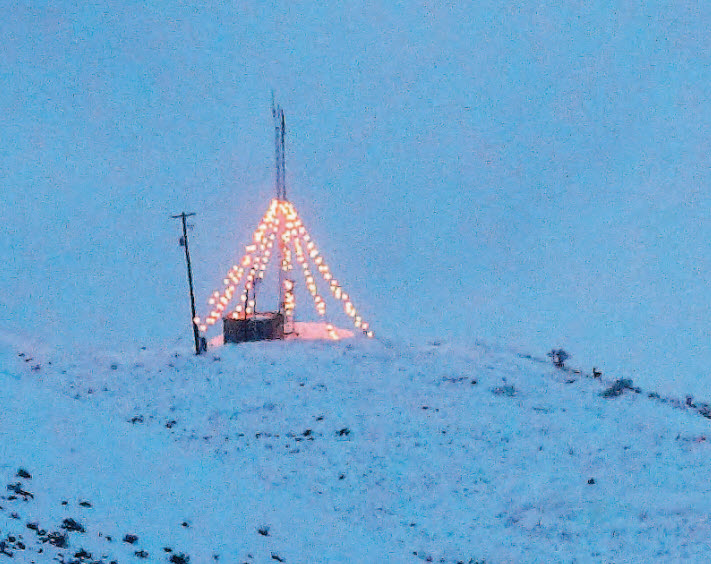
The Little Mountain Christmas Tree lights up in 2009. The tree has been a staple during the holiday season for the past 30 years. (Photo by Meagan Burr, Tooele Transcript Bulletin)
30 years ago, when Tooele residents Maxine Grimm and Paul Bevan teamed up to spread a little Christmas cheer, they never imagined that their homemade light display would become the valley’s most recognizable—and beloved—holiday symbol.
The 30 foot tall display known simply as “the Christmas Tree” became a wintertime staple. Thanks to volunteer efforts and generous donations from private companies, it has returned to its perch atop Little Mountain every year since. The tree’s current incarnation features 400 60 watt light bulbs strung taught from a cell tower. On clear nights, it can be seen as far north as I-80.
“There’s a story in everything,” said Grimm, 96, as she fondly recalled the project from her Tooele home. “I never dreamed I’d be a part of something that would be so inspirational.”
The Christmas Tree’s story began in 1979 when Grimm and Bevan set their sights on a flagpole on property owned by neighbor Doug Gordon. Positioned prominently atop the 5,515 foot Little Mountain,
the pole was visible from virtually anywhere in the valley. The friends had had flown Bevan’s 25 foot American flag from it on patriotic holidays. With a little work and some help from friends, they could transform the flagpole into a giant Christmas tree.
Bevan would take care of the technical legwork while Grimm, a longtime community service leader, would fund the project and handle public relations. Dugway Proving Grounds donated two large spools of electrical cable and Grimm talked her sister and several other friends into helping them wire the lights.
The work was done at night in the basement of Bevan’s father’s hardware store on Main Street, which is now occupied by the Sostanza restaurant. The friends laid strands of copper wire on long tables and spent long hours soldering patch cables every two feet.
“I think I was better at stripping the skin off my fingers than I was at stripping those copper wires,” Grimm laughed.
With the donated cable, the total cost for hardware—including Band-Aids—was about $500. They attached standard yellow bulbs and hauled their masterpiece to the top of Little Mountain, where they used the flagpole’s rope to raise the strands to the top. With the lights in place, it was time to breathe life into their giant Yuletide creation.
“When I finally threw switch, the lights came on like you couldn’t believe,” Bevan said. “It was brilliant.”
The brilliance lasted about a minute before things went horribly wrong.
“It was just like day, it was so bright,” Bevan said. “I was almost getting sunburned—and I was at the bottom of the hill! Then all the sudden the bulbs started popping.”

Two Tooele County Search and Rescue members set up lights on Little Mountain in Tooele in 1982. (Photo courtesy Tooele County Search and Rescue)
Bevan quickly cut the power, but only after losing a third of the bulbs. He later realized he had plugged the 110 volt cable into a 220 volt source. Though she laughs about it now, Grimm says there was no smile on her face that night.
“It was horrible. We were so exhausted and we thought all that work was gone,” she said.
But Grimm and crew persevered. A local electrician re-wired the timer box, pro bono, and Grimm bought new bulbs. The newly repaired tree was re-lit to the delight of the valley’s communities, and the new tradition was born. Grimm said many Tooele residents used the tree as a beacon—a sort of landlocked lighthouse—to find their way on stormy nights.
Bevan originally kept the light strands hanging loose so they swayed in the wind like a ball gown. He said the tree had a distinct golden glow that that inspired awe and regularly attracted curious visitors.
Once he was visited by a traveler from I-80 who was en route to Salt Lake City when the tree caught his eye.
“There were no other lights around it,” Bevan said. “It just hung up there, suspended in the blackness. The guy drove 15 miles from the freeway just to ask about it.”
The Christmas Tree was a hit, but Grimm and Bevan realized more manpower would be needed to keep the tradition alive. In 1981, Grimm successfully petitioned the Tooele County Search and Rescue team, and they have maintained the tree since.
“She could talk the socks off of anybody,” chuckled Bevan.
The process of setting up the tree has changed somewhat over the years for reasons of practicality. The flagpole was replaced by a Beehive Broadband cell tower in the same location, circa 2006. The Search and Rescue team tethered the light strands to steel cables and devised a pulley system that lifts them to the top. The strands are secured to the ground with chains, creating a taught cone shape with a 30 foot radius.
The volunteer organization meets every year before Thanksgiving to choreograph the maneuver and make any needed wiring repairs. They set up the tree on the Saturday after Thanksgiving and take it down again on the Saturday after New Year’s Day. The tree is lit every day at dusk and remains lit until 1:00 am. Tooele County foots the maintenance bill, while Beehive Broadband donates the power.
Maxine Grimm expressed a deep appreciation for the Search and Rescue team and all that have donated to the cause. Bevan, who has since relocated to Washington County, says the Christmas Tree was probably the most rewarding thing he’s ever been involved in. He plans to create a similar display with a mountainside flagpole he owns in St. George.
Grimm wants to someday place a star at the top of the tree, but hasn’t yet come up with a feasible idea.
“It would have to be mechanically right or the first wind will take it off!” she said.
Tooele County Search and Rescue Commander Fred Denison says he enjoys role in the tradition and hopes the team will maintain the display indefinitely.
“We do this for the whole county, not just Tooele City,” stipulated Denison, echoing Grimm’s notion of a guiding light. “We do it mostly in hopes that everyone finds their way home safe on the holiday.”
Grimm sees the tree as a spiritual beacon, too:
“It lifts your thinking and stirs up the spiritual in you,” she said. “So many things are changing and there are so many events that aren’t good, so you need something to hang on to. I see that beautiful light every night from my house and I get a warm feeling because it reminds me of the birth of Jesus Christ—the real meaning of Christmas.”
—
Jolly Rotor, a local aerial production company, filmed this year’s tree setup. Great video.

It’s that time of year again– that season when the sun becomes bashful and shadows drape the gaunt landscape. It’s that peculiar time when humanity actually craves shadow– if on its own terms. We embrace the macabre. We add black food coloring to our macaroni to make it look like worms. We sing songs in minor keys. We snuggle close to watch old Twilight Zone episodes.
And we we read spooky things.
Here are a few spooky things to read this year from the bonnevillemariner.com archives:
Ghosts in the desert? Past and paranormal meet in Old River Bed
Ghosts of Mercur Cemetery don’t reveal themselves easily
Saltair’s spooky side shines in “Carnival of Souls”
Ghosts of the Utah War still roam charming Camp Floyd
And to top things off, a creepy music video for my favorite Halloween song, Jonathan Coulton’s “Creepy Doll.”
Ok, so I won’t be cracking it open, but I’ll be there. If you’re a regular BonnevilleMariner reader, you know I love all things Iosepa. What is Iosepa? Just click on the Iosepa category link to the right to read all about it. The time capsule will be opened tomorrow, and I’ll be there to cover it. Stay tune for photos, video and a fresh TTB article next week!


I realize that most readers of this blog are located outside of my Tooele County community, but I’d like you to read this post anyway, because it’s about one of the best teachers I’ve ever known.
Ask anybody to name their favorite school teacher and no matter how many years or miles separate them from that classroom– no matter what their current financial status or profession– a name will immediately come to mind. It’s the one teacher that connected with them, the one who had their back when the chips were down. The one who taught them stuff they may not recall now, but who instilled a sense of unforgettable wonder and love.
For many kids in Tooele County, that teacher is Miss Karma. First, I’d like you to read an article I wrote about her for the Tooele Transcript Bulletin a couple years ago:
Planting Seeds: Rose Springs’ Karma Dale to be honored with a Huntsman Award for Excellence
“I am a strawberry, where do I grow—up above or down below?”
First grade teacher Karma Dale shows a picture of the fruit to her students, who sit, all ears, on a large alphabet rug in her Rose Springs Elementary classroom. A smile fills her face as they exclaim in unison, “Up above!” and rise to their feet.
“I’ve got a perfect class,” the seasoned instructor beams in a tone as warm and sincere today as it’s been for the last 26 years. “An absolutely perfect class!”
Dale, 57, will be honored as a recipient of the 2010 Huntsman Awards for Excellence in Education at a banquet in Salt Lake City this Friday.
“It was a total surprise,” Dale said of the announcement, which was made by Karen Huntsman during a surprise visit to her classroom last week.
But to her colleagues, the community of Stansbury Park, and hundreds of parents the county wide, Dale was a shoe-in for the prestigious award. Her nomination—one of hundreds across the state—was initiated by two parents in March and was quickly supplemented by a thick stack of endorsements from parents and co-workers.
“There simply are not adequate superlatives to describe Miss Karma’s teaching or her impact on children,” wrote Rose Springs Principal Leon Jones in her nomination packet.
Dale can’t remember a time when she didn’t want to be a teacher. She spent her childhood pretend-teaching her dolls in her Grantsville home. Her inanimate pupils sufficiently instructed, she younger brother to read before his first grade year.
After graduating from Primary in her Latter Day Saint ward at age 12, she was immediately given a teaching role in the organization. During her high school years, Dale’s uncle Levar Hansen, then Principal of Grantsville Elementary, often asked her to substitute teach.
“That’s when I knew for sure,” she said.
Dale earned an associate degree in early childhood development from Weber State University and opened a preschool in the Hansens’ basement. Over the next 13 years, Karma’s Kiddie Korner occupied various Grantsville locations, and “Miss Karma” became a household name.
After finishing a 4-year degree at Utah State University, Dale added her distinctive brand of instruction to Tooele’s East Elementary, where she taught kindergarten for 20 years. She spent another year teaching first grade at Northlake Elementary before moving to Rose Springs in 2005. After 26 years in the public school system, she still cherishes her job.
“I love to teach—it’s my everything,” she said. “It’s my life.”
Outside the classroom, Dale’s life hasn’t been easy. At age 25, she suffered a crippling stroke and underwent the grueling process of relearning how to walk, talk, and write.
She’s raised four children of her own—mostly as a single mother, which has meant taking extra jobs to make ends meet. She drives a ’94 Ford with one working door, which gets her to work every day “on a prayer.”
She says her teaching career is worth the sacrifice because it has allowed her to spend time with her kids.
“My hours matched their hours,” she said. “I had to mow some extra lawns, but I wanted to be home when they were home.”
The same dedication is apparent in Dale’s classroom, where she says she strives toward simple goal: to spark a lifelong desire to learn. Simple too is her approach: Love.
Those first few weeks [at school] I don’t care how much I teach them—I want them to know how much I value them and how much I love them. They need to feel secure. I don’t think, until they have those feelings, that they can start to learn,” she explained.
Dale believes students do best as active participants in the learning process. Learning, she says, is driven by curiosity and investigation. A well-known “Karma-ism” sums it up: “Kids learn better on their feet than in their seat.”
“I want to make school a happy, fun place to be,” she said. “Somewhere along the way we lose that magic. We forget that learning can be fun.”
Dale is well-known for her creative methods, which include hands-on and active experiences like hobo picnics, hatching chickens, and observing a caterpillar’s metamorphosis to butterfly. Students are challenged to read advanced sight words by “Winnie the Wicked Witch,” who “melts” to the floor with each successful reading.
Adding another dimension to the instruction is the class mascot, Corduroy, a bowtie-clad teddy bear, who plays several roles in the learning experience. He cheers students when they achieve; he’s there for a hug when their hurt. Often he’s a reverse psychologist, playing foil to Dale’s optimism.
“Corduroy just whispered to me that he doesn’t think the students can write those hard words,” she’ll announce.
“Yes we can, Corduroy!” comes the emphatic response.
To promote adventure and journaling, Corduroy is assigned to a single student each weekend. Students chronicle their adventures with him for a large class scrapbook. He’s a well-traveled bear, boasting trips all over the country.
“He’s the luckiest bear alive,” Dale smiled.
Dale says she makes sure to emphasize things that are of utmost importance to first grade age students—like losing teeth. Kids fortunate enough to lose their teeth under Dale’s tutelage become members of her tooth club. Their feats are graphed on a classroom wall.
“I have kids from other classes come and say ‘I’ve heard you pull teeth.’ That’s a really important thing in first grade!” she said.
Dale’s Huntsman award is made all the more gratifying by its timeliness, as she recovers from what was likely another stroke suffered last month. She says she doesn’t remember much about what happened, but says doctors told her later that they had given her a ten percent chance of surviving the first night.
News of Dale’s hospitalization spread quickly through the Stansbury Park. Rose Springs was flooded with well wishes and requests for news. A Facebook page created by family to provide updates on her status garnered over 300 followers.
To the delight of the community, Dale made a rapid recovery. Friends and family credit her indomitable spirit. Dale, in many ways, credits her students.
“I just pictured the kids in mind—their faces, their strengths, their cute little personalities, and I just needed to get back to those little faces. I needed them far more than they needed me,” she recalled.
Just over a week after being released from the hospital, Dale returned to school to visit her students, where Huntsman waited to announce her award.
“I told her she should work half days for a while,” said Jones. “But she informed me she’d be doing full days.”
Miss Karma was back in front of the chalkboard full time the following Monday. At Friday’s presentation she’ll be given a crystal trophy and a check for $10,000. Dale says she plans to put the money toward medical expenses and a better used car.
Dale’s students will finish the school year by finalizing school memory books that they’ve compiled all year. But their relationship with her won’t end with first grade.
“After I’ve taught the kids they’re locked in my heart forever,” she said.
Dale says she regularly attends recitals and graduations. Former students stop by to check in with her often. Several have grown up and entered the teaching field. Dale says she has no plans to retire, but when she does retire, she’ll probably return to the preschool, since she can’t imagine not teaching children.
Her focus is firmly on the present where, in her brightly decorated classroom, students are thrilling to a flannel board story about corn and flowers.
“Do you think it’s kind of a miracle that this tiny of a seed can grow this big a flower?” She asks them.
“Yes,” come the wide-eyed responses, as if with an inkling that planting good seeds is Miss Karma’s specialty.
—
Last year was Miss Karma’s last at Rose Springs, but she will continue touching lives as an LDS missionary. I would humbly ask you to consider donating to a GiveForward account to help cover the costs. We hope to present the funds to her at her retirement party on September 22nd. So please join me in paying it forward to Miss Karma for all that she has done for our children and community!
GiveForward – Miss Karma’s Mission


 Posts RSS
 Comments RSS
 BonnevilleMariner.com